
Every day
Circle or group experiences, art or creative work, books, conversation, movement, and opportunities to practice social and self-help skills.
Learning at Kingston
From circle time and daily art to books, journals, early math, and STEM, we give children many ways to learn. We also help them build friendships, express their feelings, and practice doing things for themselves.
Learning in everyday moments
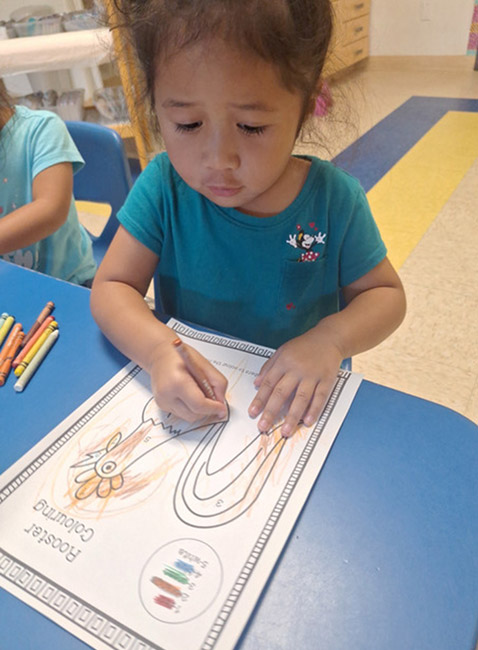
When children build a tower, they’re testing an idea. When they tell a story, they’re organizing language. When they ask a friend for a turn, they’re practicing communication.
Teachers bring books, questions, materials, short group experiences, and guided activities into the day. Children also need time to explore, repeat, move, and make choices.
Our preschool day combines teacher-led experiences with play and hands-on learning. Activities change with children’s development, interests, and the classroom’s needs.
The preschool week
This is the general rhythm of our preschool curriculum. Experiences are adapted for each classroom; infants follow their own care and developmental routines.
Circle or group experiences, art or creative work, books, conversation, movement, and opportunities to practice social and self-help skills.
Focused letter and literacy experiences, adapted to the classroom’s age and development.
Number and math experiences, shape and concept activities, and journal experiences where developmentally appropriate.
STEM and science, sensory exploration, music, fine-motor activities, outdoor play, and ideas that grow from children’s interests.
Many ways to participate
Paint, experiment with textures, make music, pretend, and turn an idea into something of your own.
Build, investigate, explore nature, and test what happens next through science, STEM, and hands-on play.
Find letters in a story, count materials, notice shapes, and build language and early school skills.
Make a friend, share an idea, ask for a turn, and work through a problem with a teacher’s help.
Run, climb, dance, balance, and build coordination through outdoor play and active experiences.
Try a task, care for belongings, ask for help, and feel the pride of doing a little more independently.
Feelings and friendships count, too
Waiting, entering play, handling frustration, and solving a disagreement are things young children are still learning.
Teachers name feelings, model helpful words, redirect when needed, and help children practice a next step. A child might learn to say “I’m still using that,” ask an adult for help, or find another way to join a game.
We guide children through behavior with calm, clear support and appropriate boundaries. We also help them build the confidence to try again.
See Learning at Your Child’s StageVisit Kingston Academy
Tour our classrooms, meet the teachers, and ask questions about your child’s day. We’d love to help you find the right fit for your family.